Were you scared the first time you saw your puppy breathing too fast while sleeping? You're not alone, and it can be very unsettling. But don't worry, it's often a normal part of puppy development.
This article aims to clarify why puppies sometimes breathe quickly while sleeping. It's important to understand what's normal in your puppy's behavior, especially when everything is so new and a bit overwhelming. So let's dive in.
Breathing Patterns
Puppies' breathing can seem complex, but it's straightforward once you understand the basics.
Normal Breathing Rates
Generally, a healthy puppy's breathing rate can range from 15 to 40 breaths per minute. However, this can vary, depending on their age and breed.
As puppies grow, their breathing rate gradually slows. Adult dogs have a slower and more regular breathing pattern. This is part of their natural development, so don't panic if your puppy's breathing changes over time.
If you'd like to know more, we have a separate article about puppy sleep schedule and habits.
How to Monitor Your Puppy’s Breathing
Keeping an eye on your puppy's breathing is easier than it sounds. You can do this by counting how many times their chest rises and falls in one minute. The best time to check is when they are relaxed or asleep.
Normal Reasons for Fast Breathing While Sleeping
Dreaming during REM Sleep
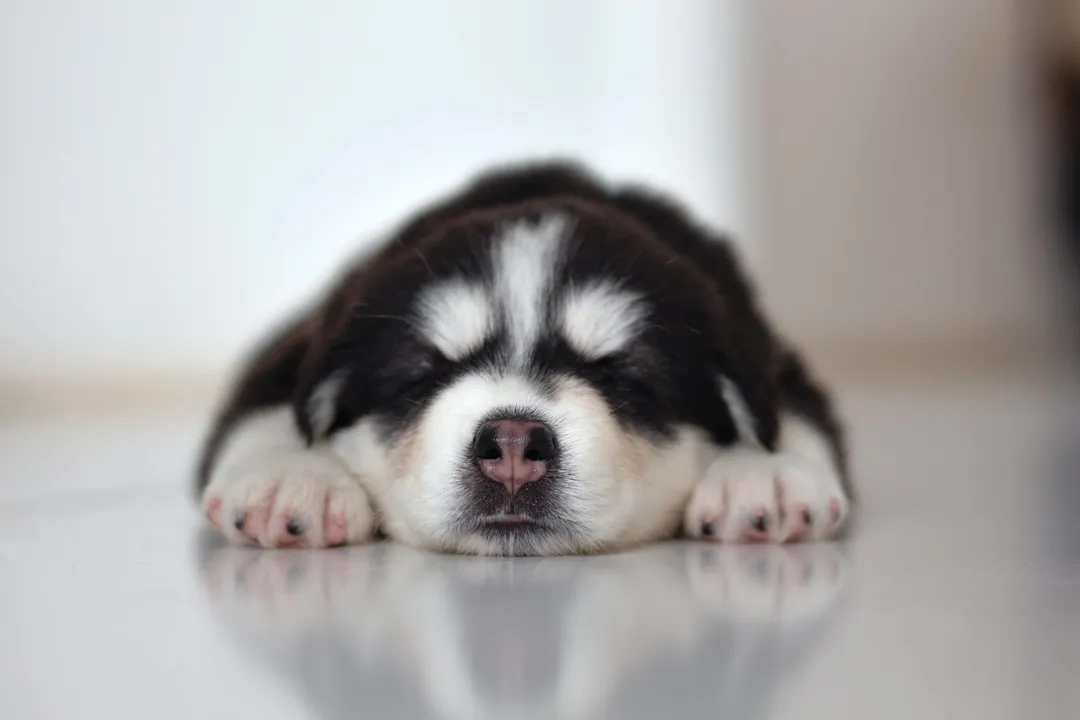
Just like us, puppies dream! During the REM (Rapid Eye Movement) stage of sleep, it's normal for their breathing to become faster and irregular. For the same reason puppies sometimes shake in their sleep. This is when they're in deep sleep, possibly chasing dream squirrels!
Relaxing after Exercise
After a good play session, puppies often breathe faster as they rest. Their little bodies are recovering from the exercise, and faster breathing helps in this process.
Cooling Down
Puppies are not as good at regulating their body temperature as adult dogs. Fast breathing helps them adjust their body temperature. So, if it's a bit warm or after some active play, you might notice an increase in their breathing rate.
These scenarios typically don't pose a risk and are part of normal puppy behavior.